
WHAT IMAGING SETTLES, AND WHAT IT DOES NOT
Most recurring headaches with a normal examination and no red flags do not need a scan. That is because imaging changes the plan in very few of those cases. A scan is called for when the exam finds something, the headache is new after age 50, the pattern has clearly changed, it started suddenly, or there was a head injury.
A scan is very good at ruling out a small number of physical causes. It is close to useless at explaining the headache you actually have. A lot of worry lives in the gap between those two facts.
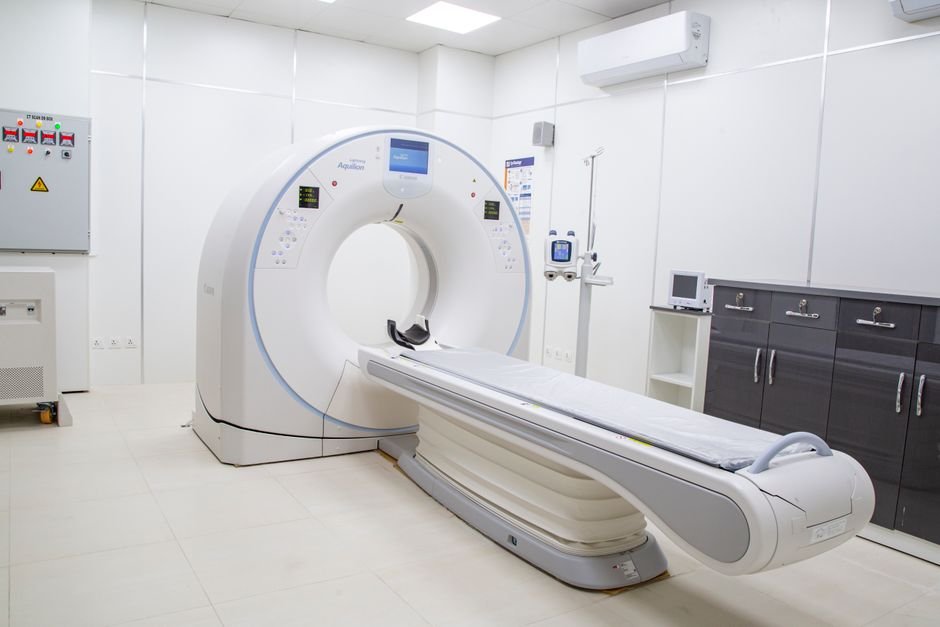
Do most headaches need a scan?
For recurring headache with a normal exam and no red flags, imaging changes the plan in a very small share of cases. That is why guidelines advise against routine scans in that case. It is not to ration a machine. It is because scans find little that matters here, and they find plenty that does not.
The word most people want from a scan is “normal.” Know this up front: a normal scan does not mean nothing is wrong. Migraine, tension-type headache, cluster headache, occipital neuralgia and medication overuse headache all are invisible on imaging. A clean scan excludes a tumor. It does not exclude the thing you have.
When do you need a scan for a headache?
IMAGING IS APPROPRIATE WHEN
- The exam finds something — a new neurological sign, papilledema (swelling at the back of the eye), or one side differing from the other.
- The headache is new after age 50. Or it is new in someone with cancer or a weakened immune system (immunosuppression).
- The pattern has clearly changed, not just carried on.
- It started suddenly. Or it always changes with body position, or gets worse when you strain.
- There was a head injury.
Which is better for headaches, a CT scan or an MRI?
They answer different questions. CT is fast and is the right test in an emergency. That is because it finds acute (fresh) bleeding, and it finds it in minutes. MRI shows soft tissue in far better detail. It is the right test for almost everything that is not urgent — the back of the brain (posterior fossa), the pituitary, and blood vessels with the right settings.
So here is the practical answer. If it is urgent enough to need a scan today, you should be in an emergency department having a CT. Do not wait for an outpatient MRI. If it is not urgent, MRI usually tells you more. Which situation is which.
What if a scan finds something unrelated to my headache?
Scan enough normal heads and you will find things: small meningiomas, arachnoid cysts, nonspecific white matter spots, an incidental aneurysm. Most have nothing to do with the headache. Some lead to years of checkups, more scans and real worry. All of it over something that was never going to cause a problem.
This is not a case for never scanning. It is a case for scanning when there is a question the scan can answer. That is a different standard than scanning to feel better.
What we do instead, when a scan is not indicated
Take the history properly. Count the two numbers. Examine the neck and the occipital nerves (the nerves at the back of the head). Review what has been tried and what it did. That sequence names the headache disorder in the large majority of cases. The reason is that these are clinical diagnoses made on pattern, not on pictures. What that visit looks like.
Questions about imaging
What scan is best for a headache?
MRI when it is not urgent, CT in an emergency. But the first question is whether any scan is needed at all. For recurring headache with a normal exam, the usual answer is no.
How do I know if it is a migraine or a brain tumor?
Tumor headache usually comes with something besides headache. That can be a new neurological sign, a seizure, a change in personality, or a headache that keeps getting worse and is worse lying flat or straining. A long history of repeat attacks that end on their own, with full recovery between them, is a reassuring pattern. If any of the worrying features are there, see the red flag page.
My doctor refused to order a scan. Was that wrong?
Not necessarily. Ask what exactly they examined before you assume you were brushed off. A refusal that comes with a proper exam and a plan is good medicine. A refusal with neither is the problem, and it happens a lot.
I already had a normal scan. What now?
That is useful to know, but it does not close the question. The next step is the history and exam that show which headache disorder this is. Then comes a plan with a preventive half. Start with the two counts.
Is it worth getting an MRI for headaches?
It is worth it when there is a question the scan can answer. The exam finds something, the headache is new after age 50, the pattern has clearly changed, it started suddenly, or there was a head injury. For recurring headache with a normal exam and no red flags, a scan changes the plan in very few cases. It can also turn up chance findings that bring years of worry.
What will an MRI show for headaches?
An MRI can rule out a small number of physical causes, such as a tumor. It will not show migraine, tension-type headache, cluster headache, occipital neuralgia or medication overuse headache. That is because all of those are invisible on imaging. It may also show things that have nothing to do with your headache, like small meningiomas, arachnoid cysts or nonspecific white matter spots.
Why would a doctor order a CT scan instead of an MRI?
Because the situation is urgent. CT is fast and finds acute (fresh) bleeding in minutes. That makes it the right test in an emergency. MRI shows soft tissue in far better detail. It is the better test for almost everything that is not urgent. If you need a scan today, you belong in an emergency department having a CT, not waiting for an outpatient MRI.
Do migraines show up on an MRI?
No. Migraine is a clinical diagnosis. It is made from the pattern of your attacks and the exam, not from a picture. A normal MRI rules out a tumor, but it does not rule out migraine. That is why a clean scan can leave you with the same headaches and no answer. It is also why the next step is a proper history, the two counts and a plan.
What to read instead of a scan report
- When to go to the ER
- What happens at a headache clinic
- Headache specialist or neurologist?
- How many days did you lose last month?
- What to bring
- The emergency room cycle
A normal scan is not a plan
If you have had the imaging and still have the headaches, the missing step is the history and the examination that name the disorder. That is the appointment.
12174 Natural Bridge Rd, Suite 304
St. Louis, MO 63044
Next to DePaul Hospital, off the I‑270 and I‑70 junction, west of the airport.
Sources
- Evans RW et al. Neuroimaging for Migraine: The American Headache Society Systematic Review and Evidence-Based Guideline. Headache, 2020. PubMed 31891197
- Gadde JA et al. Neuroimaging of Adults with Headache: Appropriateness, Utilization, and an Economical Overview. Neuroimaging clinics of North America, 2019. PubMed 30926111
- Pohl H. Red flags in headache care. Headache, 2022. PubMed 35167120
- García-Azorín D et al. Sensitivity of the SNNOOP10 list in the high-risk secondary headache detection. Cephalalgia : an international journal of headache, 2022. PubMed 36003002