
WHERE IT HURTS · THE TEMPLES
A headache in the temples is usually tension-type headache, migraine, or strain from the jaw and the chewing muscle that sits over the temple. The one exception that needs same-day attention is giant cell arteritis.
Both temples is usually ordinary. One temple, new, after fifty, with a tender artery is the single most time-critical headache presentation in medicine.
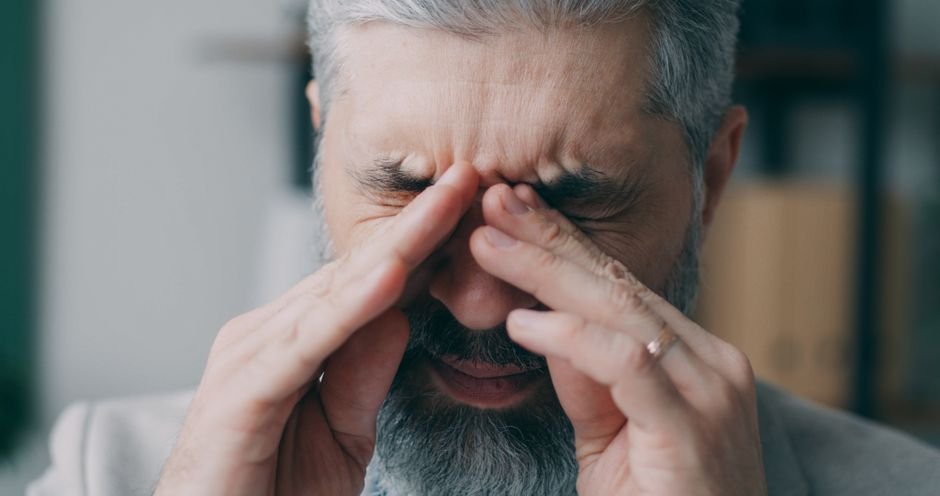
When should I worry about a headache in the temples?
GIANT CELL ARTERITIS — SAME-WEEK, NOT SOMEDAY
- New headache after age 50, usually one temple.
- The scalp is tender — a comb, a pillow, glasses arms hurt.
- The jaw aches or tires while chewing and eases when you stop.
- Any visual change: blurring, double vision, a curtain, brief loss.
- Feeling generally unwell, low fever, shoulder and hip stiffness.
Untreated, this can take the sight in one eye and then the other, and the loss is permanent. It is diagnosed with blood tests and treated urgently. If several of those apply to you, do not book a routine appointment — call your physician today or go to an emergency department. Everything else on this page can wait.
What causes a headache in the temples?
TENSION-TYPE
- Both temples, a squeeze rather than a throb, no nausea.
- Builds through the day, eases on the weekend.
MIGRAINE
- Often one temple, throbbing, worse on movement, with nausea or light sensitivity.
- Discrete attacks with well days between them.
JAW AND BITE
- Temple pain with clicking, locking, or morning jaw soreness points at the temporalis muscle and the joint under it.
- Grinding at night is the common driver and it is often news to the person doing it.
Why the temple is such a busy address
The temporalis is a large chewing muscle that sits exactly there, the superficial temporal artery runs over it, and the first two divisions of the trigeminal nerve supply the region. Muscle, artery and nerve in one small area is why the same location produces a benign daily squeeze and a sight-threatening arteritis, and why the age and the tenderness matter more than the pain score.
Why do temple headaches keep coming back?
Two upstream drivers set the threshold: sleep that is short or shifted raises next-day pain sensitivity, and clenching load rises with sustained concentration and with disturbed sleep, so the two feed each other. The third is scheduling — meal gaps and a working pattern that offers no point at which the jaw and neck unload. That is why temple pain so reliably peaks late afternoon.
Frequently asked questions
When is temple pain an emergency?
New after 50 with scalp tenderness, jaw claudication or any visual change. That combination is assessed the same day — see the alert box above and new headache after fifty.
Why do both my temples hurt every afternoon?
That pattern is usually tension-type with a clenching component. It is a frequency and load problem — start with the counts.
Can my jaw cause temple headaches?
Yes. The temporalis inserts there, so jaw overuse is felt in the temple — the jaw and ear page.
Does temple pain mean high blood pressure?
No, that is a common but unfounded link — why the reading follows the headache.
How do you get rid of temple headaches?
First rule out the urgent one: new temple pain after 50 with scalp tenderness, jaw pain on chewing or any visual change is assessed the same day. For the ordinary kind, work on what sets the threshold. Protect sleep, because short or shifted sleep raises next-day pain sensitivity; close long meal gaps; and look for nighttime grinding or clenching. Then count headache days.
Is a headache in one temple more serious than both?
Both temples is usually ordinary: a squeeze rather than a throb, no nausea, building through the day. One temple can be migraine, with throbbing, nausea or light sensitivity and well days between attacks. One temple that is new after 50, with a tender scalp, jaw pain on chewing or any visual change, points to giant cell arteritis and is assessed the same day.
Follow this up with
Age and tenderness decide the urgency here
If it is new, one-sided and after fifty, act today. If it is the long-standing afternoon squeeze, bring the diary.
12174 Natural Bridge Rd, Suite 304
St. Louis, MO 63044
Next to DePaul Hospital, off the I‑270 and I‑70 junction, west of the airport.
Sources
- Bosch P et al. Cranial involvement in giant cell arteritis. The Lancet. Rheumatology, 2024. PubMed 38574747
- Younger DS. Giant Cell Arteritis. Neurologic clinics, 2019. PubMed 30952412
- Buttgereit F et al. Polymyalgia Rheumatica and Giant Cell Arteritis: A Systematic Review. JAMA, 2016. PubMed 27299619
- Starling AJ. Diagnosis and Management of Headache in Older Adults. Mayo Clinic proceedings, 2018. PubMed 29406202