
WHEN IT HAPPENS · ON WAKING, OR AT NIGHT
A headache that is there when you wake usually comes from medication overuse, poor sleep, sleep apnea or night grinding. A headache that wakes you from sleep points to cluster headache, hypnic headache or, less often, raised pressure inside the head.
Timing is the most under-used diagnostic information in headache. A headache that is present the moment you open your eyes, or that wakes you from sleep, narrows the list faster than any imaging.
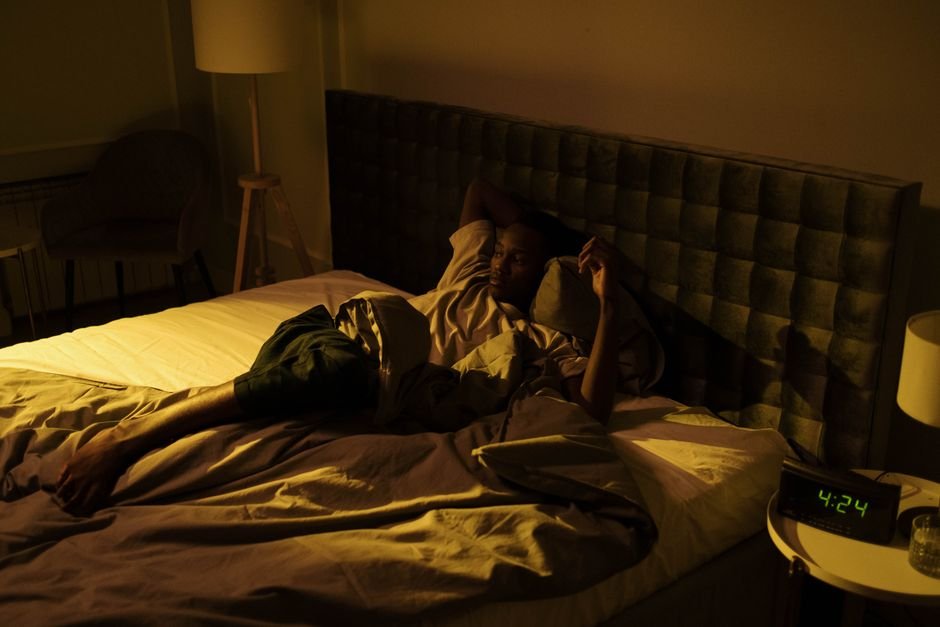
Is waking up with a headache different from a headache that wakes you up?
“I wake up with it” and “it wakes me up” are not the same. The first is common and usually benign. The second — pain that pulls you out of sleep at a consistent hour — is a smaller and more specific group, and it is worth stating in those exact words.
PRESENT ON WAKING
- Night grinding — morning jaw and temple soreness, worn teeth.
- Medication overuse — the classic pattern is waking with it as the last dose wears off. If you are dosing on ten or more days a month this is the first thing to consider.
- Poor sleep quality — short, fragmented or shifted sleep raises next-day pain sensitivity directly.
- Sleep apnea — morning headache with snoring, witnessed pauses, daytime sleepiness. Treatable, and frequently missed.
WAKES YOU FROM SLEEP
- Cluster headache — strikingly punctual, often 1–2 hours after falling asleep, one side, severe, with a watering eye or blocked nostril. Fifteen minutes to three hours.
- Hypnic headache — uncommon, typically over 50, wakes at a consistent time, both sides, milder than cluster.
- Raised intracranial pressure — the one that matters. Worse lying flat, worse on waking, progressive, sometimes with vomiting or visual blurring.
GET THIS LOOKED AT PROMPTLY IF
- It is progressive over weeks and consistently worse lying flat.
- There is vomiting, especially without much nausea beforehand.
- There is new visual blurring, double vision or unsteadiness.
- The red-flag page.
How does poor sleep cause morning headaches?
This is a loop, not a cause. Short or fragmented sleep measurably lowers pain threshold by the following day; pain fragments sleep the same night. Neither end is the real one, which is why treating only the headache stalls. Two biological drivers sit under it — disrupted sleep architecture raising arousal-linked muscle activity, and the glucose instability that follows a short night.
The third is a schedule: shift rotation, a phone by the bed, a bedtime that moves four hours on the weekend. That is the input most amenable to change and the one least often addressed. Sleep and headache.
Frequently asked questions
Why do I wake up with a headache every day?
Daily morning headache has three usual explanations: medication overuse, sleep apnea, and night grinding. All three are treatable and all three are commonly missed. Start with the medication-day count.
What kind of headache wakes you up at night?
Cluster is the classic and it is punctual and severe. Hypnic headache is the milder, older counterpart. The one that must be excluded is raised pressure, which is progressive and positional.
Why the headache arrives at the same time every day goes through it in detail.
Could it be sleep apnea?
If there is snoring, witnessed pauses or daytime sleepiness, yes, and it is worth pursuing — morning headache is a recognized feature and treating the apnea often resolves it.
The sleep and headache page explains what that looks like.
Does the time it happens really matter?
It is one of the highest-yield details you can bring. Record the clock time, not just the day — how to keep the diary.
Is a morning headache a red flag?
Usually not. Waking up with a headache is common and usually benign, and the causes are treatable. Get it looked at promptly if it has been getting worse over weeks and is consistently worse lying flat, if there is vomiting without much nausea beforehand, or if there is new blurred vision, double vision or unsteadiness. That pattern raises the question of pressure inside the head.
How can I stop waking up with a headache?
Find which cause is yours first. Count the days you take a painkiller: ten or more a month makes medication overuse the first suspect. Snoring, witnessed pauses in breathing or daytime sleepiness point to sleep apnea. A sore jaw and worn teeth point to night grinding. Then steady the schedule: shift rotation, a phone by the bed and weekend sleep that moves by hours all feed the loop.
Can painkillers cause morning headaches?
Yes. The classic medication overuse pattern is waking up with the headache as the last dose wears off. If you are taking something for headache on ten or more days a month, that is the first thing to consider, before sleep apnea or grinding. Bring the count of medication days, not just headache days, to the appointment.
Where this leads
Which conditions run on an internal clock, and which run on your schedule.
Bring the clock time, not just the day
Punctuality is diagnostic in headache. Two weeks of times will narrow this faster than a scan.
12174 Natural Bridge Rd, Suite 304
St. Louis, MO 63044
Next to DePaul Hospital, off the I‑270 and I‑70 junction, west of the airport.
Sources
- Tiseo C et al. Migraine and sleep disorders: a systematic review. The journal of headache and pain, 2020. PubMed 33109076
- Kaniecki RG et al. Headache in the elderly. Handbook of clinical neurology, 2019. PubMed 31753152
- Starling AJ. Diagnosis and Management of Headache in Older Adults. Mayo Clinic proceedings, 2018. PubMed 29406202
- Lanteri-Minet M. Hypnic headache. Headache, 2014. PubMed 25231430